
Food Fight: Food Rescue at CPW
At the co-op, we understand food is a precious resource. We also know that wasted food is a critical issue. Nearly 40% of food grown today ends up in the waste stream, alongside the shocking statistic that one in five Minnesotans faces food insecurity. That juxtaposition is unacceptable, so we’re actively fighting food waste, beginning with distribution at our warehouse. We spoke with Erin Pavlica, Sustainability Lead at Co-op Partners Warehouse, and Mary O’Toole, Volunteer Coordinator with our longstanding donation partner TC Food Justice, to explain our fight to save the food.
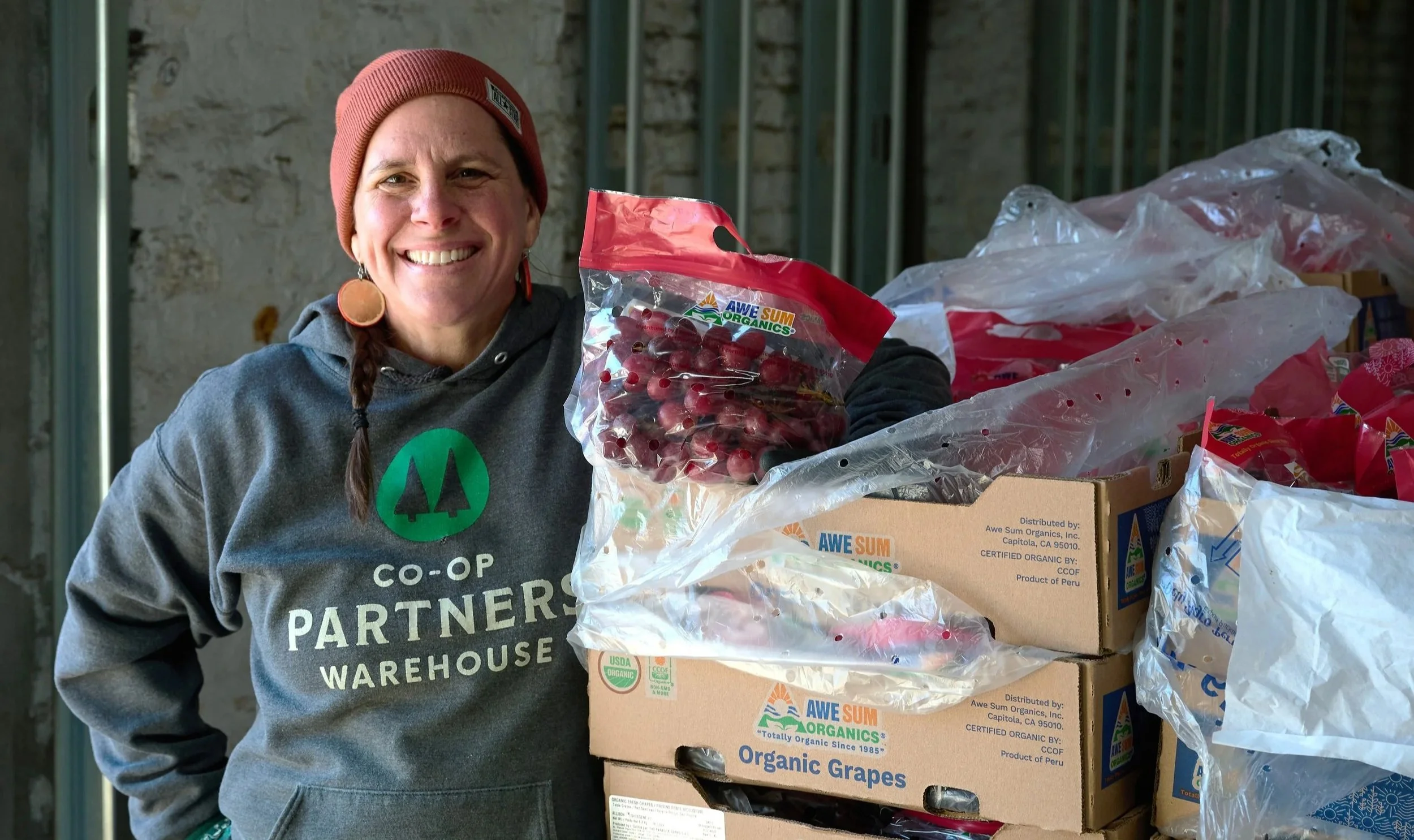
Erin with organic red grapes for donation.
Wedge Co-ops: What is your role at the Wedge/Co-op Partners Warehouse?
Erin Pavlica: I wear many hats. I came to CPW with a passion for food waste reduction, so I coordinate our food donations, assess and cull produce for quality- counting and consolidating product, manage returns/credits, and most of the waste that flows through the warehouse!
When Erin started [in 2019], the donation program was inefficient. “We allowed our partners into the warehouse to “shop the bank”, she explains. “It was very hard to track our donations for metrics and tax purposes… [and it was] not very safe for our staff or partners.” She also noticed not much was being composted, so she sought grants through BizRecycling. The grant funded food rescue and trash mitigation, facilitated increased organics recycling, reduced trash pick-up from three days a week to two, streamlined collection bins into three categories, and started composting paper towels from bathrooms.
WCC: What steps are being taken at the warehouse to prevent edible food from being wasted?
EP: “From the time it is flagged by receiving, alerted to the buyer, and assessed by management, we have a good idea what to do. If something is “runnable”, we’ll go through each case and remove problematic food. If there’s mold or cold-damage, we’ll compost it. If it has blemishes that’ll make it hard to sell but it’s still edible, we prep it for donation.”
collaboration is key to rescuing food
WCC: In your mind, are community partnerships necessary to prevent wasted food? Why?
EP: “Absolutely! There are so many reasons we donate food: quality issues, temperature damage, over-buying or discontinued products, weather related events, issues around recent tariffs… but having… year-round donation partners makes food, otherwise wasted, go out to people in need.”
CPW coordinates with local organizations TC Food Justice, Sisters Camelot, and First Nations Kitchen to rescue fresh food every week.
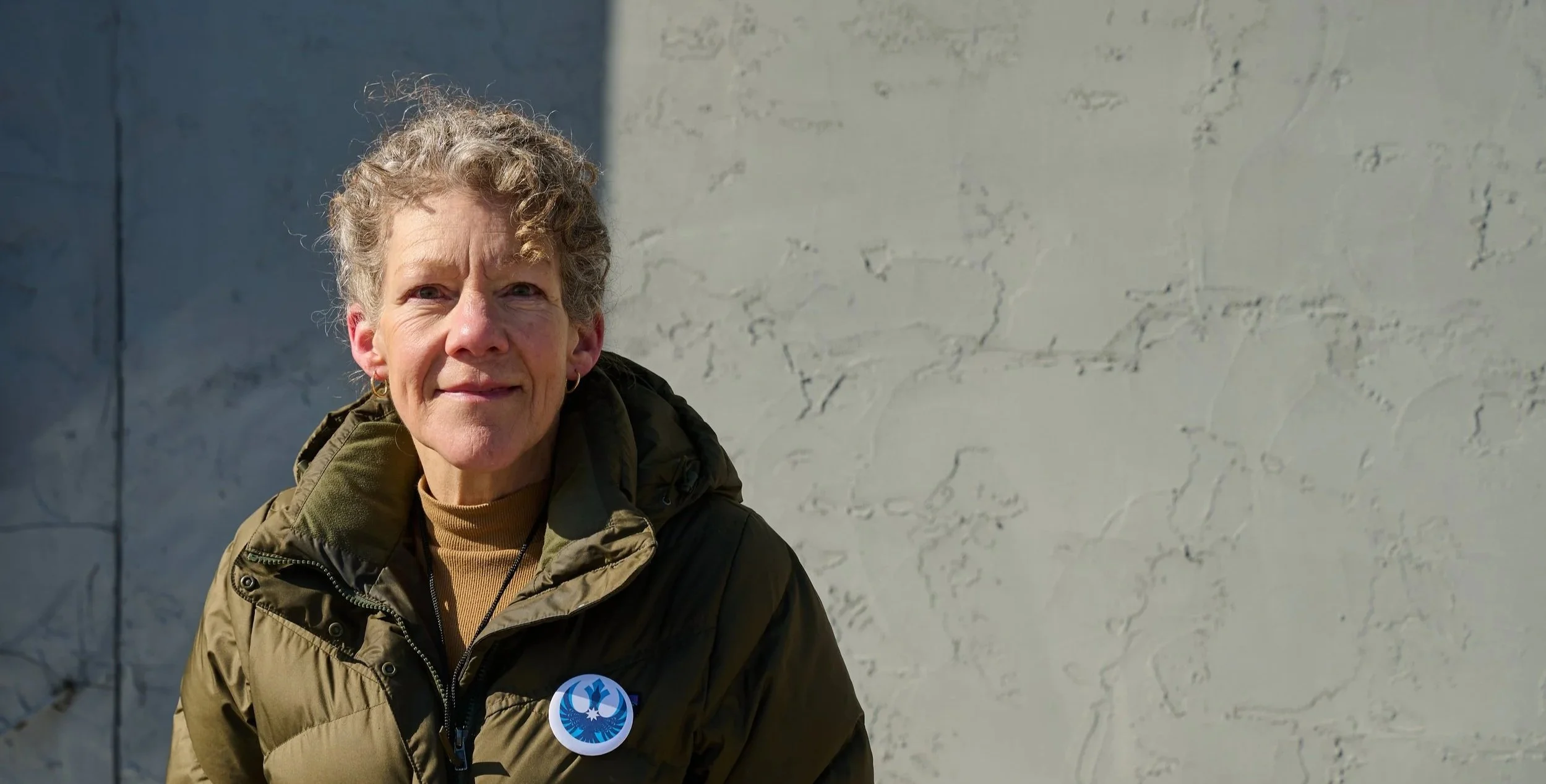
Mary volunteered with TCFJ for four years before stepping into the Volunteer Coordinator position.
“There’s waste, and there’s need.” Says Mary O’Toole, who coordinates volunteers for TC Food Justice’s many food shelf and meal program partners.
“Rescuing food turns two problems into one beautiful solution! [TCFJ’s model is] simple and direct: there’s the donor, me, and the recipient. Together we’re directly addressing one of humanity’s greatest inequities: hunger.”
“Without community partnerships, waste has nowhere to go but the landfill. With community partnerships, what might be excess or waste to one becomes healthy nutrition to another. Civic leaders also need to be part of the partnership; they need to create a favorable environment for addressing both waste and hunger in the community.”
taking food rescue a step further
WCC: How do you recommend someone begin preventing food waste?
EP: “I encourage folks to utilize the bulk bins at the co-ops, meal plan with the bits and bobs in the crisper drawer- soups/stews don’t care if your celery is limp! Freeze leftovers for lunch at work and break bread with your neighbors. Share the love and abundance!”
“I am constantly looking at how things can be repurposed, reused, recycled… From gardening, to my home kitchen (I have 4 kids), to zero waste community events, this is not just a job, it’s my way of life.”
As the largest organic distributor in the Midwest, CPW plays a vital role and needs to continue to lead and innovate. To create a more sustainable and equitable food system, rescuing and donating is a major part in fighting the good (food) fight.
efforts to reduce food waste extend beyond the warehouse
In stores, products get pulled if deemed unsellable for any reason- like blemished produce or grocery items past the date stamp. Rarely does “unsellable” mean inedible. Because most is still edible, culled food is offered to staff first. Remaining items are donated to Groveland food shelf- including bread seven days a week.
In 2025, Wedge Linden Hills donated 35,687 pounds.
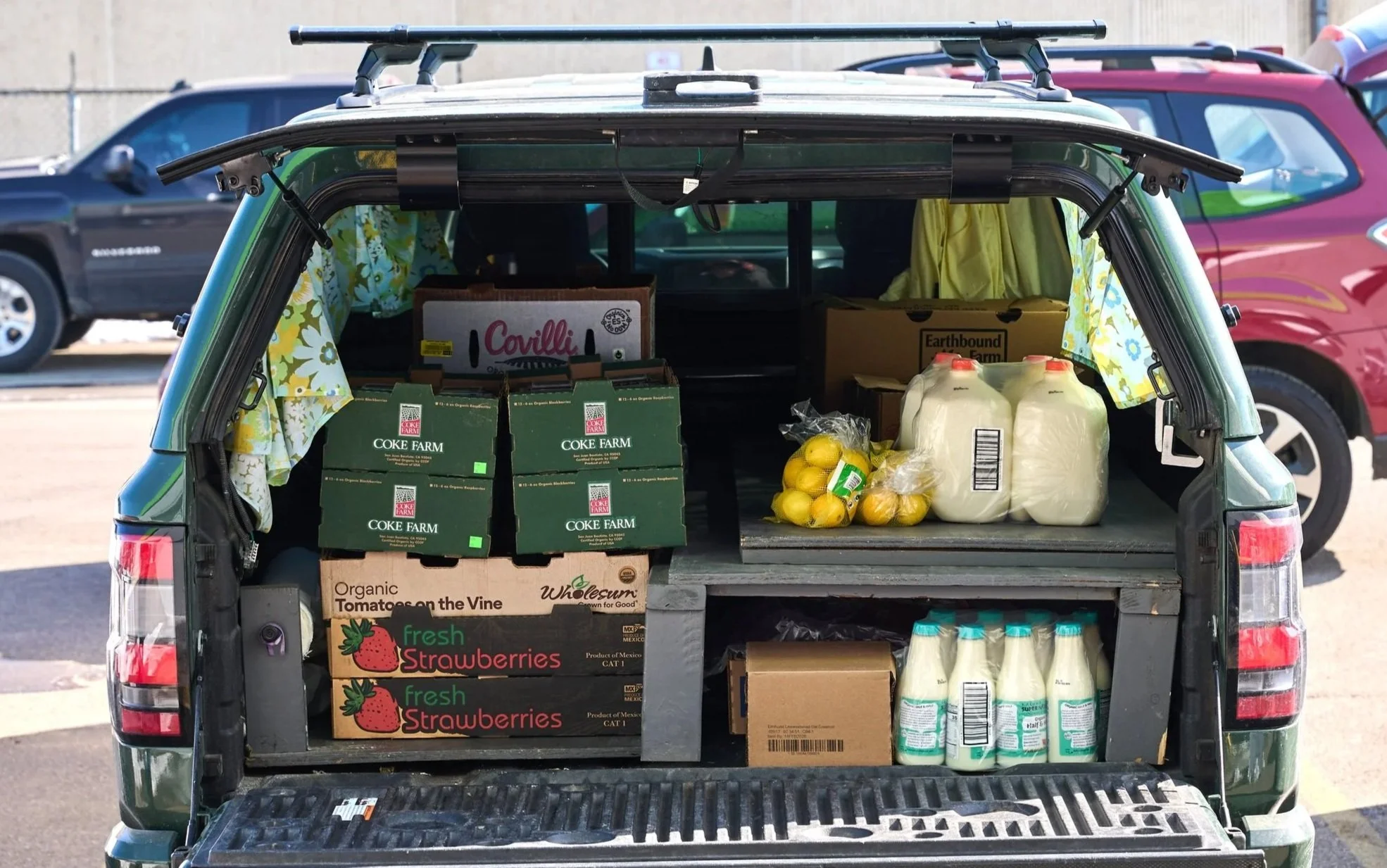
This full load of rescued food will be donated to a local food shelf.