
Ripening Rooms at CPW
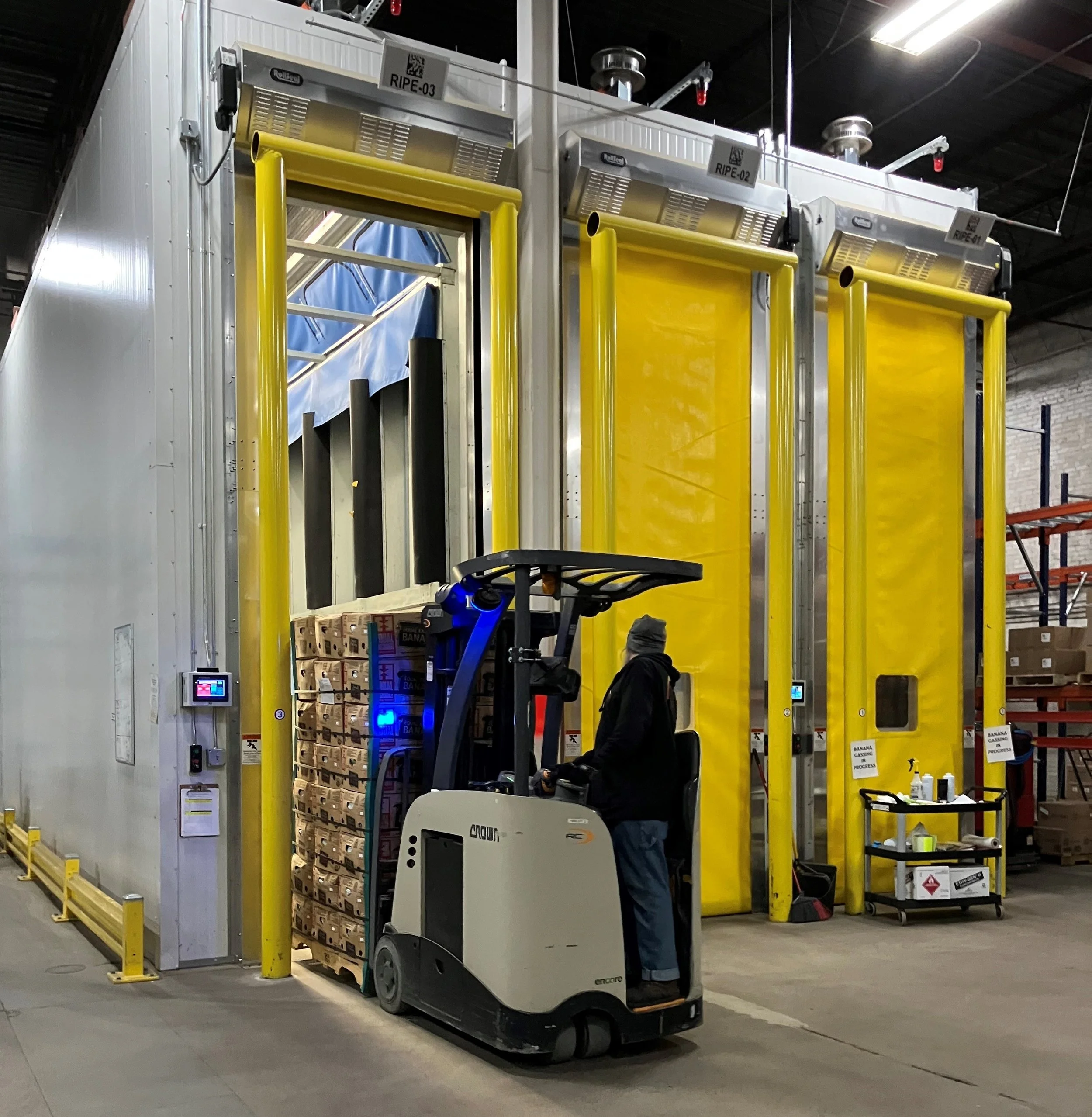
Warehouse staff receive specialized training to operate forklifts in and out of the ripening rooms.
Are they exclusively for bananas, or can other fruit be ripened?
No, we currently use the ripening rooms for avocados as well. These rooms could be used to ripen other fruits too, such as mangoes or tomatoes.
What does it do to the fruit?
Ripening is stimulated through a scientific process. In the ripening room, enzymes in the fruit are activated that cause the starch to be broken down into sugar, and the chlorophyll in the peel to turn yellow. It interacts with the cell walls within the fruit and makes them softer.
How long does it take?
Bananas typically take four to eight days to ripen, depending on the desired color stage and the fruit’s maturity when it arrives.
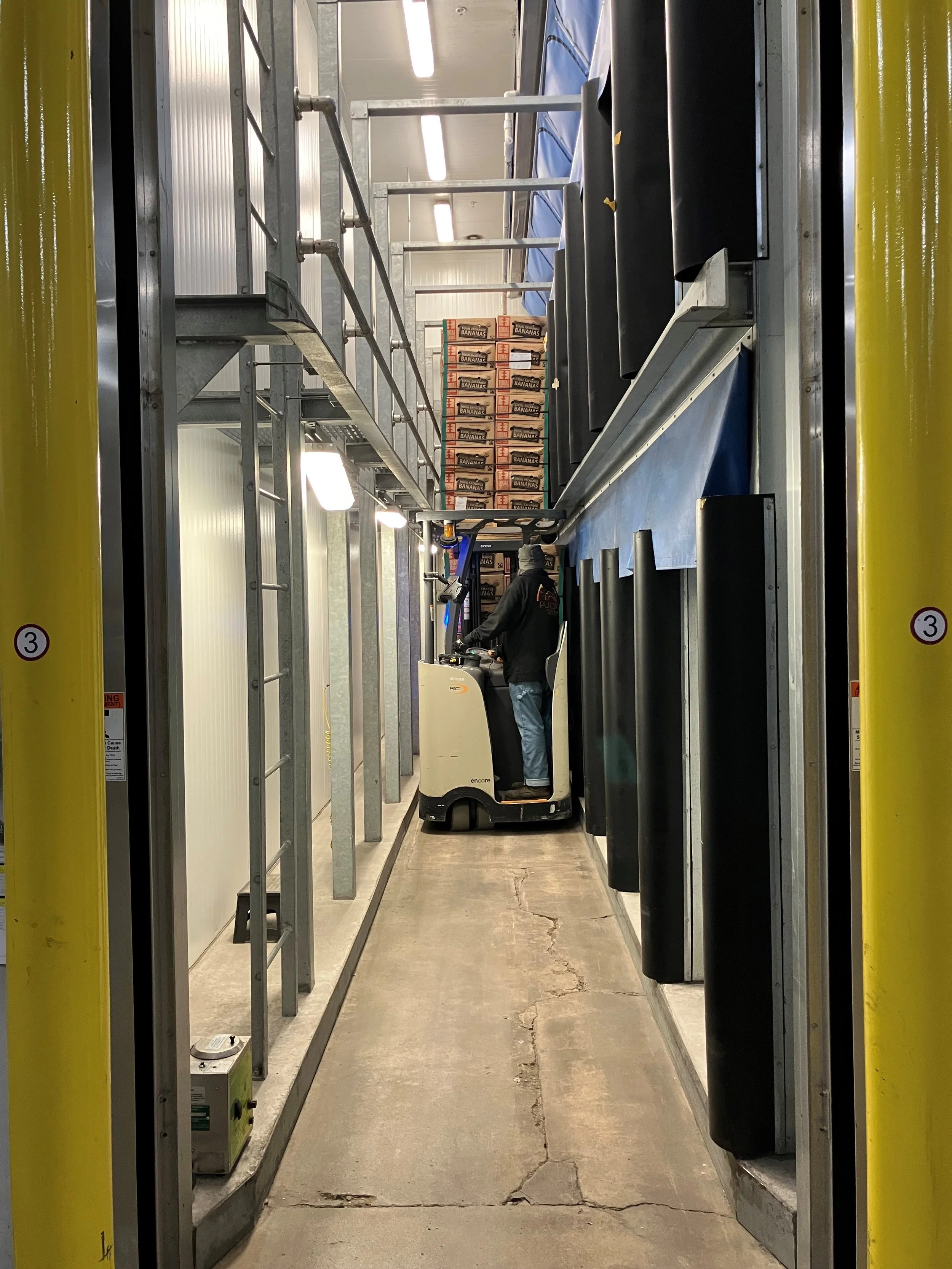
Fabian precisely places a full banana pallet into the upper level of ripening room 2.
How long does the fruit last after going into the ripening room?
After bananas enter a ripening room, their remaining shelf life depends on how ripe they are when they leave the room, and the temperatures they’re exposed to afterward. In ripening rooms, they last between five and seven days. After leaving the ripening room for transport to retail, they’ll last between three and seven days- depending on temperature and color stage.
“Turning” is the most desirable stage of ripeness for retailers, since it’s the sweet spot between unripe green, and overripe. Taking this nuance into account, bananas that arrive on Wednesday are typically sold by the following Monday.
“They go into the ripening rooms the day they are delivered as long as we have room. We alternate weekly between receiving 960 cases (20 pallets) and 1920 cases (40 pallets). We must warm them up to about 62 degrees prior to gassing. Typically, after gassing they take several days to get to “turning” stage. ”
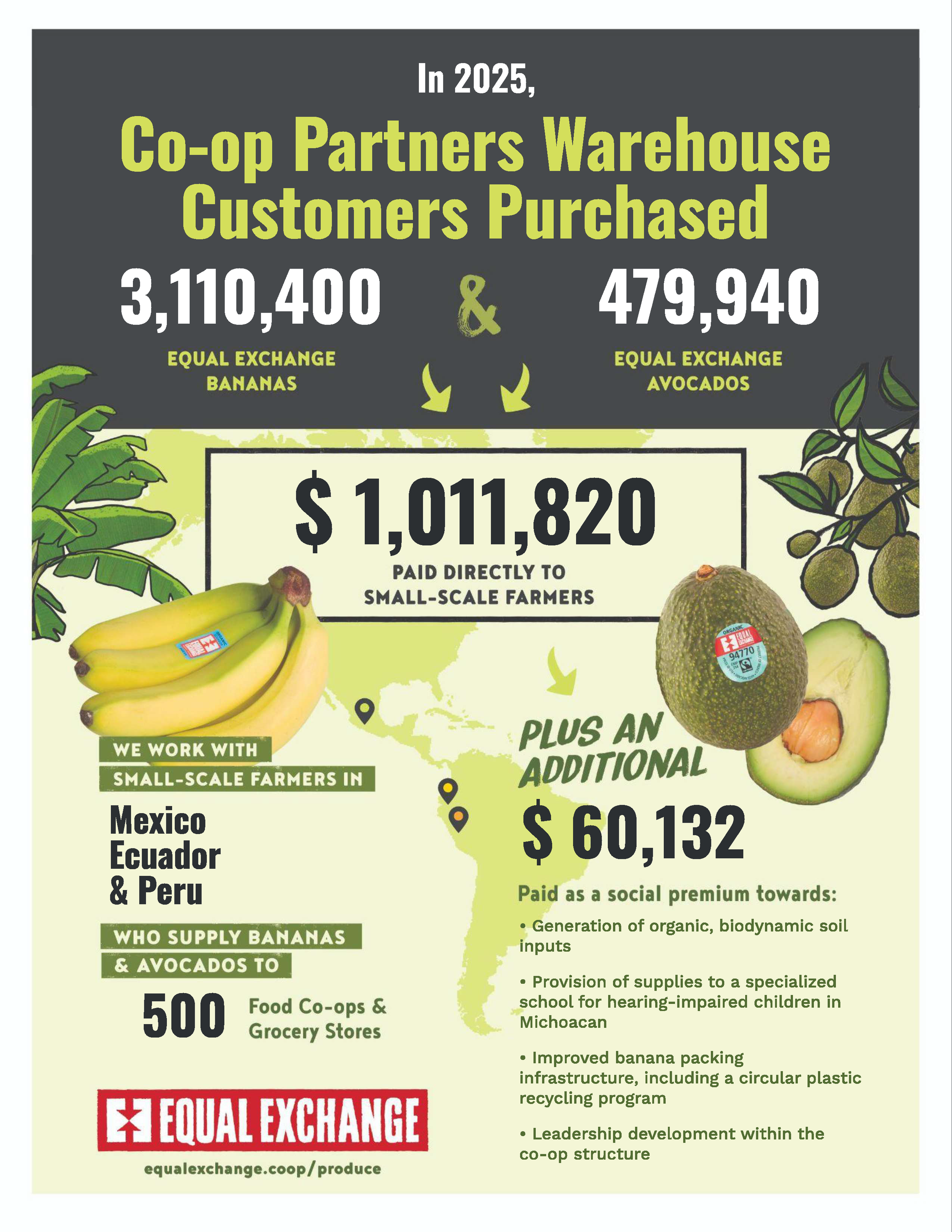
CPW’s 2025 banana and avocado impact report from Equal Exchange.
Did you know that CPW operates three state-of-the-art ripening rooms? With two-levels and a 16 pallet capacity each, these equipment rooms control atmospheric conditions for ripening, including temperature, air flow, and humidity. Bananas are our top selling item, and without the ripening rooms, CPW’s banana volume would be drastically reduced. In 2025 alone, our customers purchased over three million fair trade, organic bananas. We consulted our Operations Team Leads, Fabian and Sal, to learn more about this impactful technology.
Once a shipment of bananas arrives on our dock, a multi-step process is triggered to ensure peak quality is maintained.
Give us an overview of these “ripening rooms”. How do they work?
The ripening rooms are designed to increase the longevity of the product being ripened and stored within. This is done by creating optimal conditions for storage & ripening. The rooms allow our banana ripening specialists to make minor adjustments to temperature that can slow or increase the speed of ripening. During the ripening process, a chemical reaction is occurring within the pallets, causing the overall temperature to rise. The rooms counteract this process by pushing air through the boxes to cool them. Bananas can also turn a grayish color if they dry out, which is why the ripening rooms have a relative humidity around 90%.
Lastly, there is an ethylene generator in the ripening rooms that releases the correct percentage per minute of ethylene needed to facilitate the ripening process.
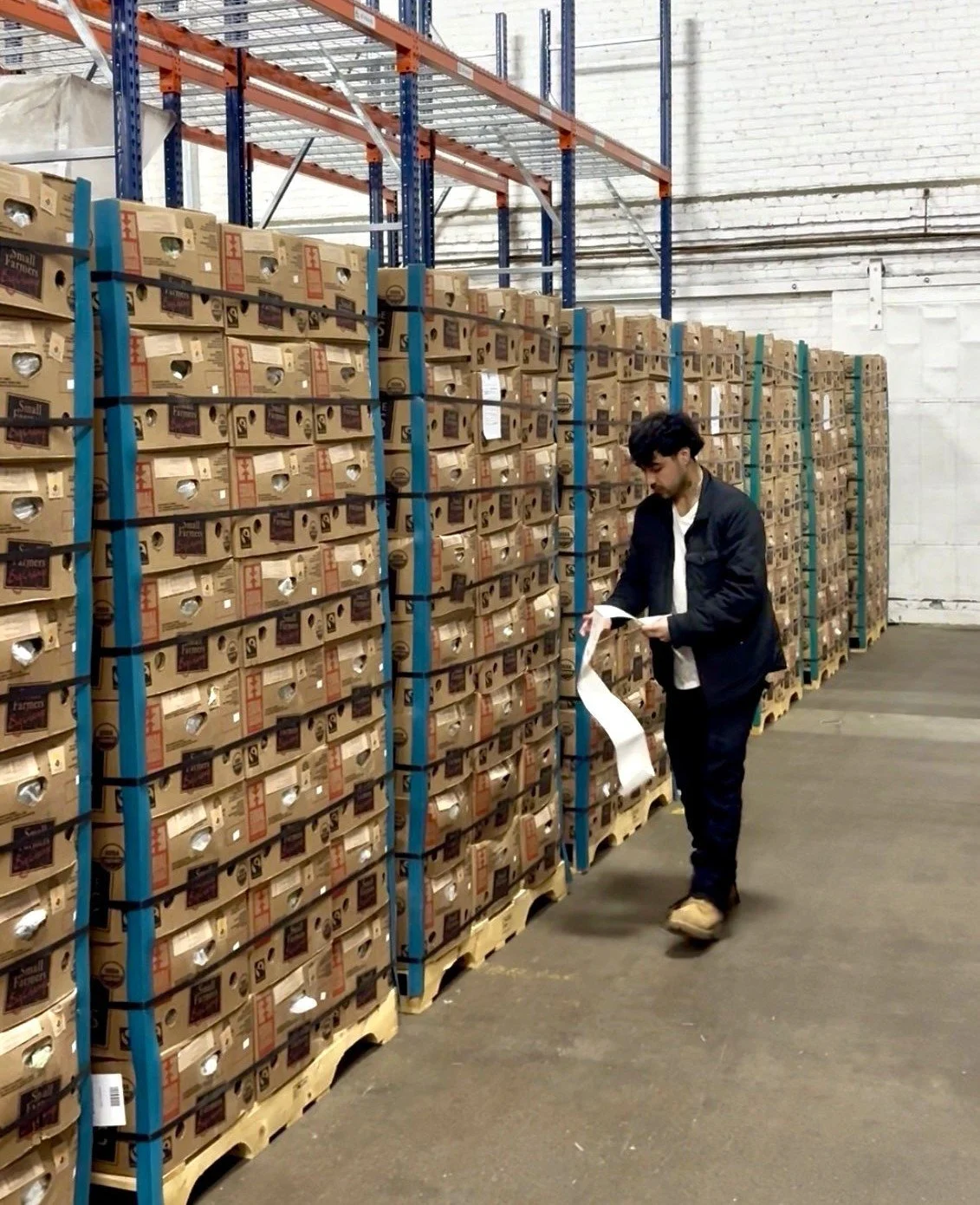
Ripening Room Lead Fabian labels pallets of bananas to determine when they’ll go into the ripening room.
CPW is the only mid-sized wholesaler with this technology. How does it set us apart?
Having this technology onsite has allowed CPW to be the sole distributor of Equal Exchange bananas in the Midwest. Before installing the ripening rooms, we had to outsource ripening efforts to another wholesaler. Since operating the onsite ripening rooms, we have seen much more consistent quality.
In addition to increased consistent quality, significant cost savings emerge from housing ripening operations onsite. Following the supply chain flow, savings on transportation and operations not only benefit CPW as a supplier, but lead to direct savings for our customers.