
Partner Spotlight: Westby Co-op Creamery
By Erik Parr, CPW Dairy Buyer
Lead times of up to three weeks. Demand that changes with the direction of the wind. Supplier-mandated weight or quantity ordering minimums. These are just a snapshot of some of the hurdles experienced as a wholesale dairy buyer. But one challenge has consistently made itself known week in and week out… how to meet the current global demand for cottage cheese?
Once a staple of fad diets in the midst of the 20th Century before being eclipsed by its cultured cousin yogurt in the late 1970s, this dairy delight has seen a resurgence in popularity, largely due to the advent of short-form video platforms (I’m looking at you, Tik Tok). People have (re)discovered cottage cheese’s versatility, whether it’s folding it into eggs, blending it into a post-workout smoothie, or even baking it into chips. It’s clear that cottage cheese demand is indicative of more than a passing trend, that it’s firmly entrenched in the consumer marketplace as more people take an active interest in the foods they and their families are consuming.
So, with all the evidence suggesting that this is a boom that will last, enter Westby Cooperative Creamery. Founded in 1903, this 100-farmer-owned cooperative just North of Viroqua WI has been at the forefront of providing high-quality cultures and other dairy products. And as with many established businesses, Westby Cooperative has weathered storms due to changing consumer trends, resource availability and inevitable economic shifts. But, under the leadership of CEO JD Greenwalt, Westby has been able to successfully navigate these market challenges, posting a $3 million profit in 2025.
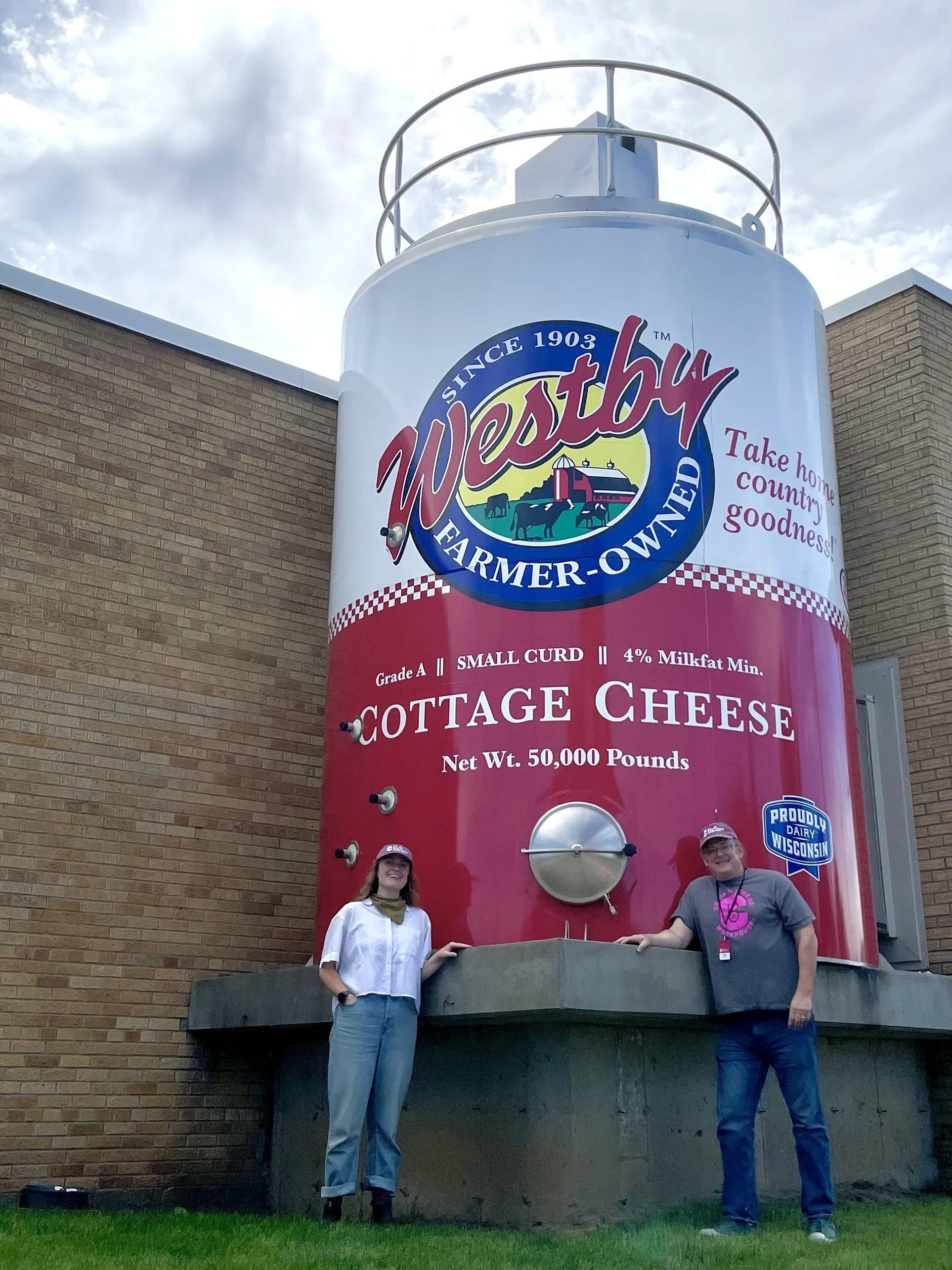
Purchasing Manager Mackenzie and Dairy Buyer Erik pose outside the cottage cheese production facility.
Recognizing the sustained demand for cottage cheese and uniquely positioned as Wisconsin’s only cottage cheese manufacturer, Westby developed a plan to significantly increase its production capacity. Three years and $15 million later, they’ve unveiled a modernization project unlike anything one will see anywhere else in the US, and I, along with CPW Purchasing Manager Mackenzie, were among the first people invited to see it.
Pulling up in front of Westby’s retail shop, the crowd was made up of an array of people from a variety of industries and professions. News crews, USDA inspectors, mechanical engineers, local politicians… the interest and anticipation generated by this expansion project was palpable. We mingled, exchanged pleasantries with Curtis, the Retail Sales Rep, and Emily, the Sales and Marketing Manager, then proceeded to walk two blocks south to the processing facility.
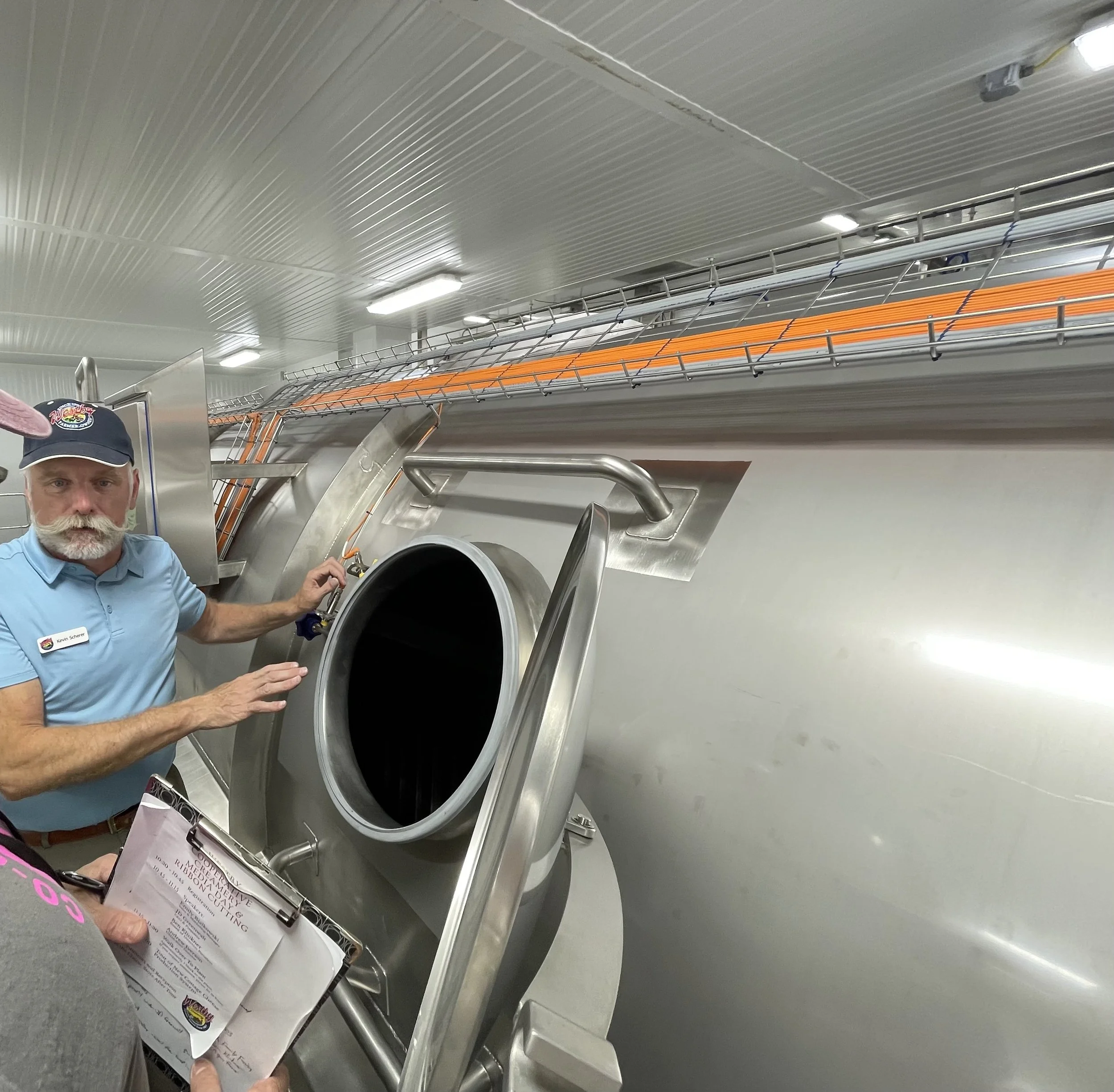
Westby Co-op Creamery tour guide explains new, high-capacity cottage cheese equipment.
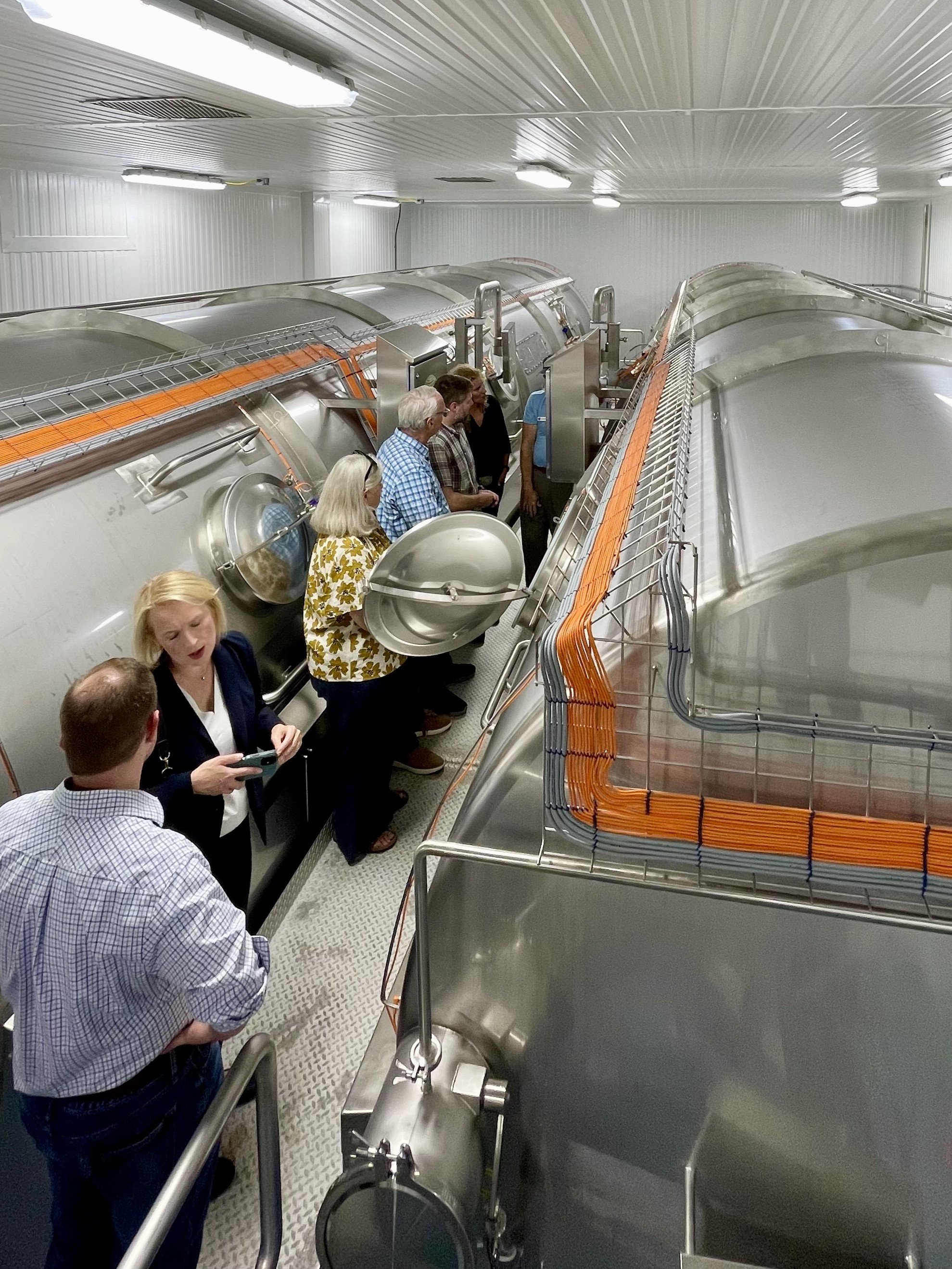
New Multi Cheese Vats operate within a fully enclosed system that halves production time- from 16 to eight hours.
Due to tight space coupled with an active production schedule, our access to the plant was limited and we were ushered inside after being split into groups to view the new equipment. The first area we were able to take a detailed look at was the cooling tanks. Utilizing closed-vat technology that’s been available in Europe for fifteen years, these tanks can produce up to 12,000 lbs. of cottage cheese per run, an increase of approximately 50% from previous volumes. Crucially, this technology ensures that the final product is free of airborne contaminants, a significant risk associated with the traditional open-vat methods. The energy efficiency for which the closed-vat technology is known also allows the curd to be cooled in as few as five hours, a dramatic reduction from the 14+ hours of cooling time necessary with the previous system.
The technological overhaul doesn’t end there. Every phase of the manufacturing process has been meticulously planned to maximize efficiency, from the time spent slicing the milk curds with the knives reduced from 25 minutes down to just two, to the complete automation of ingredient delivery and vat-cleaning. The result is increased product yield, faster processing, and greater employee safety. And per my source at Westby the response by customers to this increased production capacity has been overwhelmingly positive.
Given the mounting pressures the current economy faces, it would be understandable for a business to be risk-averse when it comes to allocating capital to any production pipeline improvements at this time. But, after my experience visiting Westby Cooperative Creamery, speaking with and listening to its employees, it’s clear that moving forward in this capacity is reflective of the values that its founders held dear- or as one sixth Generation farmer described it… “Faith, Family, Farming.”
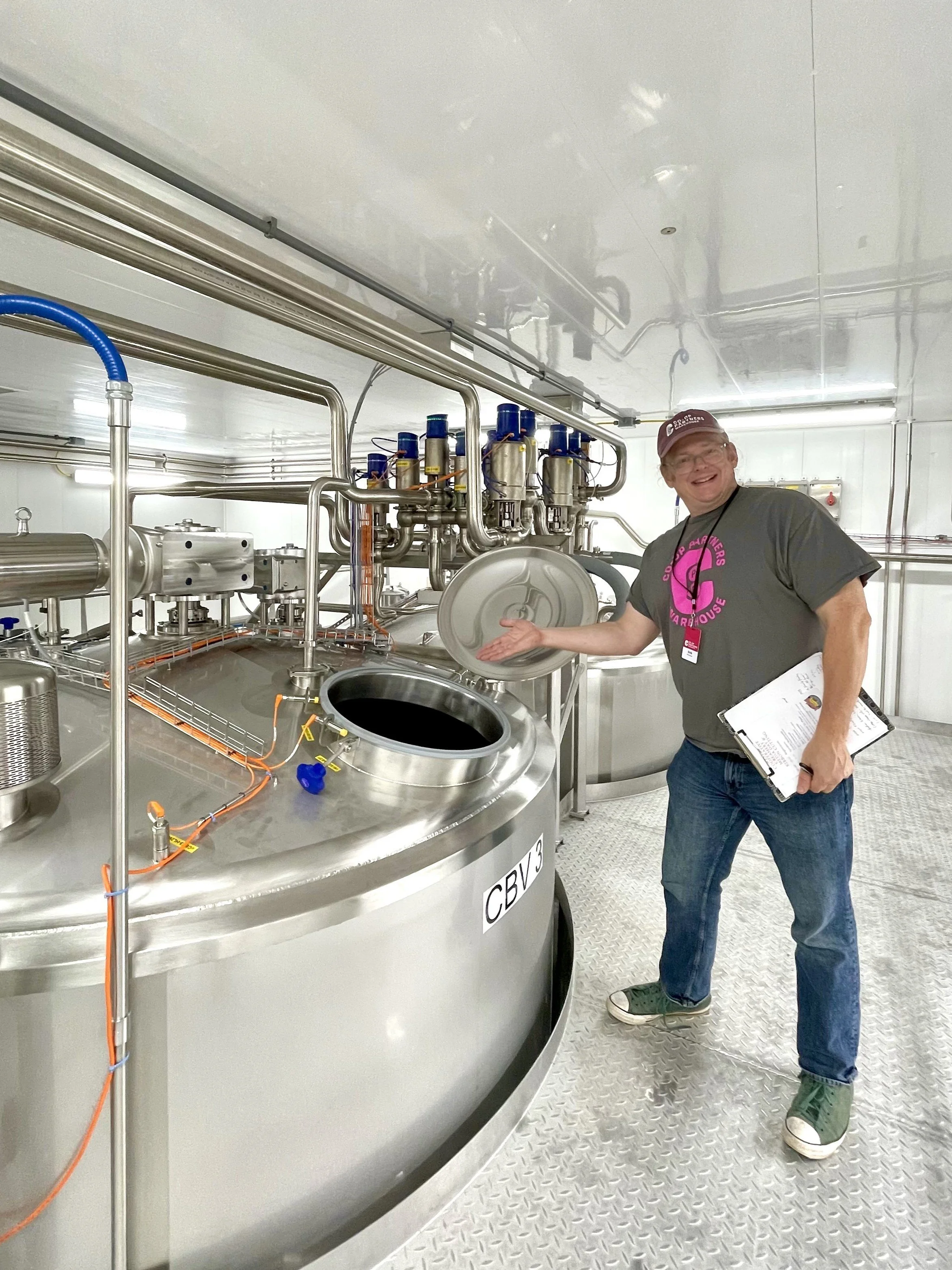
Erik stands with the cooling tank.